

Building productive teamsMotivating & inspiring others
Motivating teams in practice
Motivating teams in practice

5 minutes
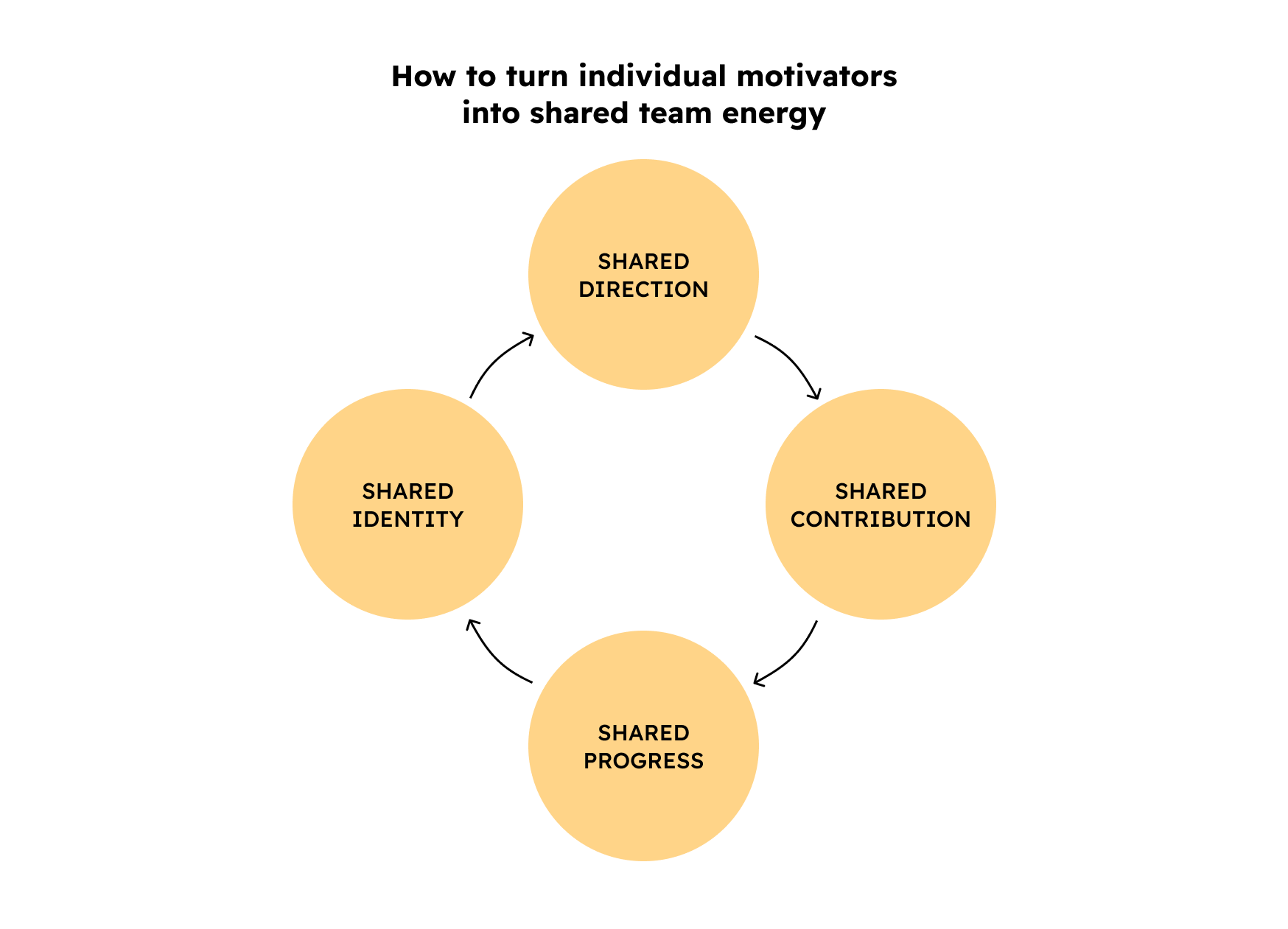
These four leadership habits help teams feel aligned, confident and connected. Practice them regularly to strengthen shared motivation across your team.
1
Shared Direction
When everyone understands the goal and why it matters, effort feels coordinated and purposeful.
Leader actions:
• Begin team time with a reminder of what the team is aiming for
• Connect individual work to the bigger picture
• Explain the reason behind priorities so effort feels meaningful
Example:
A warehouse team starts the shift by confirming the target for on-time deliveries that day.
Leader actions:
• Begin team time with a reminder of what the team is aiming for
• Connect individual work to the bigger picture
• Explain the reason behind priorities so effort feels meaningful
Example:
A warehouse team starts the shift by confirming the target for on-time deliveries that day.
2
Shared Contribution
Motivation improves when people can see how their work helps the team succeed. Clarity builds confidence and pride.
Leader actions:
• Make role ownership visible so everyone knows who does what
• Pair people up to solve problems together
• Ask “How did your work help us move forward?” in check-ins
Example:
In a project team, each person shares one way their work moved the project forward this week.
Leader actions:
• Make role ownership visible so everyone knows who does what
• Pair people up to solve problems together
• Ask “How did your work help us move forward?” in check-ins
Example:
In a project team, each person shares one way their work moved the project forward this week.
3
Shared Progress
Progress fuels momentum. When wins are visible, people keep putting in the effort.
Leader actions:
• Track progress visually where the team can see it
• Celebrate small milestones together
• Share stories that show improvement, not perfection
Example:
A customer support team highlights how many issues were resolved together this week.
Leader actions:
• Track progress visually where the team can see it
• Celebrate small milestones together
• Share stories that show improvement, not perfection
Example:
A customer support team highlights how many issues were resolved together this week.
4
Shared Identity
Teams feel stronger when they have a positive sense of who they are together. Identity shapes behaviour, energy and expectations.
Leader actions:
• Create small rituals that bring people together
• Use “we” language to reinforce unity
• Recognise behaviours that reflect your team strengths
Example:
A project team ends their weekly meeting by sharing one behaviour they saw in a teammate that reflects what the team is proud of, such as curiosity, helpfulness or persistence.
Leader actions:
• Create small rituals that bring people together
• Use “we” language to reinforce unity
• Recognise behaviours that reflect your team strengths
Example:
A project team ends their weekly meeting by sharing one behaviour they saw in a teammate that reflects what the team is proud of, such as curiosity, helpfulness or persistence.
These four habits reflect the core motivational needs identified in Self-Determination Theory : autonomy (purposeful direction), competence (contribution and progress) and relatedness (belonging and identity).
What this means for you as a leader
- Direction gives contribution purpose.
- Contribution leads to progress.
- Progress builds identity.
- Identity strengthens commitment to direction.
Motivation becomes shared and sustainable.
Try this
- Choose one of the four habits for the next fortnight.
- Practice the leader actions with your team.
- Notice what feels different in energy and alignment.
- Then layer in another habit.
Motivation becomes shared and sustainable.
Sources
Gallup. (2023). 4 Drivers of Employee Engagement. Retrieved from https://www.gallup.com/workplace/236927/employee-engagement.aspx
McKinsey & Company. (2023). What is psychological safety. Retrieved from https://www.mckinsey.com/featured-insights/mckinsey-explainers/what-is-psychological-safety
Center for Self-Determination Theory. nd. Self-Determination Theory (Deci & Ryan). Retrieved from https://selfdeterminationtheory.org/the-theory/


Ben Robinson
by
Ben Robinson
Executive Coach and Organisational Development Leader | Coached over 200 leaders