

Time Management Matrix
Time Management Matrix

5 minutes

As an individual contributor, your productivity was measured by your own output. As a leader, it’s measured by what you and your team achieve together. At the same time, your calendar fills faster than ever: meetings, team questions, new requests and your own work all compete for the same hours.
Time management for leaders means choosing where your time goes based on results, not activity. You focus on what matters most, and optimise your time.
At its core, it comes down to knowing the difference between two things:
- Urgent tasks demand attention now. They have deadlines, they’re visible, and someone is usually waiting on them.
- Important tasks move you and your team towards your goals. They rarely shout for attention, so they’re easy to put off.
Some tasks are both urgent and important. Some are neither. Knowing which is which is the first step to optimising your day.
This is where the Time Management Matrix comes in.
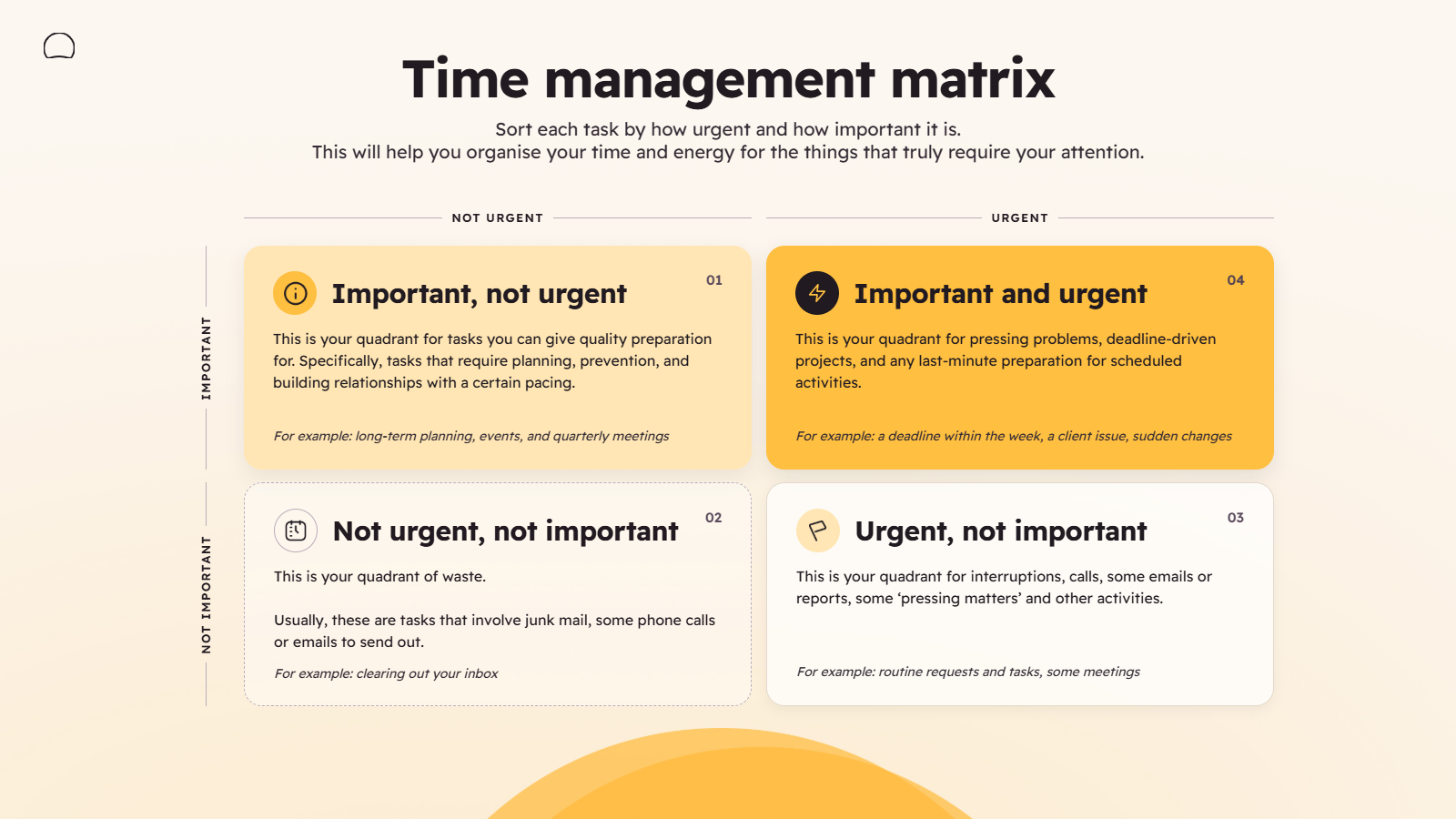
The Time Management Matrix is a visual way on how you can organise your tasks. What goes first? What can be done later? It sorts your work into four quadrants based on how urgent and how important each task is. Seeing everything laid out this way shows you where your time is going right now, and how you can organise your tasks effectively and efficiently.
“I’ll get to it later.”
How often does this thought come up in a week?
Procrastination is as tempting for any new leader as it is deadly. “I’ll get to it later” may seem harmless, but this has led to the downfall of many new managers learning to manage everything all at once. Over time, this one “I’ll get to it later” snowballs, and the work piles up.
And when everything feels urgent, you end up reacting all day, which leads to you carving up time to catch up on other work in times when you should be planning, or even resting. And while working harder seems like a good virtue to have as a leader, this gets to a point: stress builds, and your effectiveness in making decisions also becomes affected. Your team then also loses a leader who has time to think ahead and support them.
The research shows exactly this. A study released through the Journal of Consumer Research tells us that when given a wide number of tasks, people tend to prioritise urgent but low-priority tasks over important ones – even when the payoff is remarkably low.
- Deadlines influence which tasks get prioritised. And even when individuals have experienced negative consequences of putting urgent but unimportant tasks over important tasks first, those with deadlines continue to be prioritised.
- People who feel their schedules are busy and workload is high are even more likely to prioritise urgent tasks first purely due to deadlines.
In other words: busy isn’t always the same as being productive. But what you can do is step back, identify the urgency and importance of your tasks, and optimise accordingly.
There is no avoiding responsibilities, but these can certainly be managed. The Time Management Matrix is one simple yet effective way to identify how you can prioritise: what needs to be done, what’s important, what’s urgent, and what can be deferred to another time.


Hellomonday